In late 2015, Walgreens announced that it would acquire Rite Aid stores for $17.2 billion, and that was about the time WBA stock peaked. Then on June 29, 2017, antitrust regulators only allowed an acquisition of less than half of Rite Aid stores for $5.18 billion and soon after the stock price continued its decline. Then on September 19, 2017, Walgreens was approved to acquire 1,932 stores from Rite Aid for $4.38 billion, which coincided with another tumble in the stock price. With those acquisitions now integrated with Walgreens, the consolidated company had over $131.5 billion in sales at August 2018 fiscal year-end, which it outperformed next fiscal 2019 year-end at $136.8 billion.
So why is Walgreens stock down over 61% ($37.21 today) from its peak at $96.64/share? The answer is twofold. The first is the Amazon effect and the second has to do with a decrease in margins.
When Amazon announced the acquisition of PillPack on June 28, 2018, Walgreens initially took a brief tumble, before surging up to $84.85 on November 29th, 2018. Since then Walgreens stock has continued to tumble as more and more start-up tech companies race to deliver prescriptions to customers doors. It is becoming more common to simply have your prescriptions delivered to your door by companies such as Express Scripts that was acquired by Cigna on March 7th, 2018. This is bad for Walgreens since some customers walk through their retail store and at times pick up general retail or over-the-counter drug items on their way to the pharmacy counter. Walgreens depends on those non-prescribed sales.
That leads to the second problem, which is decreased margins. This is primarily the result of customers buying less non-prescribed items, which have larger margins. Even though Walgreens has improved operations through cost cutting and shutting down underperforming stores, the stock cannot catch a bid by investors. What should the company do?
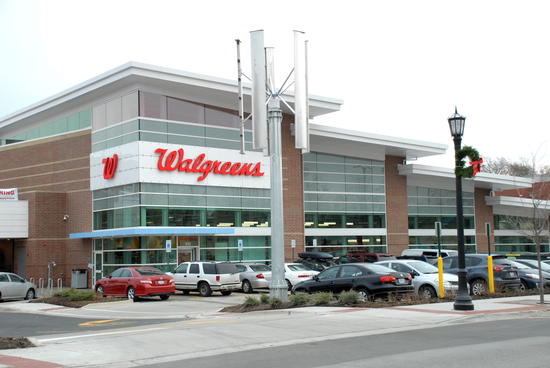
Let’s start by identifying strengths. About 78% of the U.S. population lives within five miles of a Walgreens (company also has international operations through its Boots brand, but is about 10% of operations). Each store is approximately 13,500 square feet and are typically found on the corner of busy intersections in every major city of the U.S. They sell not only life saving drugs, but also items that consumers buy regularly. Now consider that Amazon has acquired Whole Foods (30-43k square feet for each store) and are planning on building mini warehouses that are about 100,000 square feet. Apparently, for Amazon to meet the demands of its customers in same day delivery, they need to have items closer to customers to meet that commitment. Right now, it is difficult for Amazon to compete with Walgreens in satisfying customer’s needs in less than an hour. A customer can simply drive down to the nearest Walgreens and receive a long list of items to meet their immediate needs.
Walgreens has a competitive advantage that is undiscovered by Wall Street and that the company’s management has not fully realized. It can deliver thousand of items in less than an hour to about 78% of the U.S. population. Right now, you can go onto Instacart, Postmates or DoorDash and have delivered not only prescription drugs, but also any of the thousand of items within Walgreens stores. Depending on what agreements Walgreens currently has with these tech delivery companies, the company could potentially cut the middleman out and deliver the items themselves. This is clearly an advantage over Express Scripts, which only delivers prescriptions. Think of the promises that pizza companies have touted for years. Domino’s offers a 20-minute delivery guarantee. Walgreens should capitalize on its current partnerships with tech deliver companies and advertise a maximum delivery guarantee of an hour similar to their one-hour photo business. This would crush Amazon as they are currently unable to meet that expectation due to the concentration of all their products in massive warehouses tucked away on the outskirts of major cities.
Even if Walgreens does not capitalize on the one-hour delivery promise, the company is still undervalued on a cash flow perspective. Currently the company has a free cash flow of about $4.89/share and the stock is trading at 7.6 times free cash flow. Assuming the company stopped paying a dividend, the discount rate is 11% and free cash flow growth is zero, then the company would be fair valued. However, it will most likely continue to pay a dividend (currently 4.95%) especially since it just raised the dividend, not cut or suspend it like several companies did during the 2020 pandemic/recession, and it will grow free cash flow by at least 1%. Therefore, using a discount rate of 7% and free cash flow growth of 1%, the fair value is above $56/share or 50% above its current price. I see the potential of Walgreens and it could very well be worth over $80/share if it can maximize the value of delivery. That is an upside of 115%.
The conclusion is buy WBA stock and collect the dividend while the company works out a turn around strategy. If it falls, then buy more. This could be a big compounder that will outperform the overall stock market long-term.
Disclosure: I own shares of WBA